

Thomas Sowell: A Maverick Economist and Intellectual Force


Thomas Sowell is an American economist, social theorist, and author who has made significant contributions to the fields of economics, political philosophy, and social policy. Born on June 30, 1930, in Gastonia, North Carolina, Sowell’s life journey and intellectual evolution have had a profound impact on conservative and libertarian thought. Sowell’s early life was marked by challenges and adversity. Growing up in Harlem, New York, during the Great Depression, he faced the hardships of poverty and a difficult family environment. However, he managed to overcome these obstacles through his intellect, determination, and a thirst for knowledge.
After serving in the United States Marine Corps, Sowell pursued higher education, earning his bachelor’s degree in economics from Harvard University. He went on to complete a master’s degree in economics from Columbia University and a Ph.D. in economics from the University of Chicago. Throughout his career, Sowell held positions at various institutions, including the University of California, Los Angeles, and Cornell University.
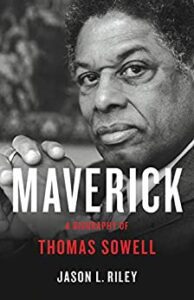
Sowell is most closely associated with the Hoover Institution at Stanford University, where he was a Senior Fellow. Sowell’s work spans a wide range of topics, but he is best known for his research and writings on economics, race, and social policy. He is a staunch advocate of free markets, limited government, and individual liberty. His insights challenge conventional wisdom and provide alternative perspectives on complex social issues. Some of Thomas Sowell’s most popular works include:
“Basic Economics: A Citizen’s Guide to the Economy”: In this widely acclaimed book, Thomas Sowell breaks down complex economic principles into digestible concepts that anyone can grasp. With real-world examples and clear explanations, Sowell empowers readers to understand the fundamental forces that shape our economy and the implications of policy decisions.
“Knowledge and Decisions”: In this seminal work, Thomas Sowell explores the relationship between knowledge, incentives, and decision-making in various realms of life, from economics to politics. Sowell argues that policymakers should be aware of the limits of their knowledge and consider the unintended consequences of their actions, as well as the dispersed knowledge held by individuals in the market.
“Race and Culture: A World View”: Thomas Sowell tackles the controversial and sensitive topic of race and culture with rigor and nuance. Drawing on extensive research, Sowell challenges prevailing narratives and examines how cultural factors influence economic and social disparities among different racial and ethnic groups. This thought-provoking book encourages readers to critically examine the role of culture in shaping outcomes and challenges simplistic explanations of racial inequality.
“The Vision of the Anointed: Self-Congratulation as a Basis for Social Policy”: In this incisive critique, Thomas Sowell challenges the self-congratulatory mindset prevalent among policymakers and intellectuals. He argues that well-intentioned policies often fail to achieve their desired outcomes and even have detrimental effects. Sowell’s analysis exposes the dangers of an unchecked belief in the superior wisdom and benevolence of the intellectual elite.
“Intellectuals and Society”: Thomas Sowell turns his attention to the role of intellectuals in shaping public opinion and policy decisions. He highlights the influence that intellectuals have in various fields, from academia to media, and questions their claims of expertise and authority. Sowell argues that intellectuals often prioritize their own ideals and agendas over practical considerations, leading to misguided policies that do not align with the realities faced by ordinary people.
Thomas Sowell’s works are characterized by rigorous research, data-driven analysis, and a commitment to challenging prevailing narratives. He is known for his ability to communicate complex ideas in a clear and accessible manner, making his writings influential among both academics and the general public. Thomas Sowell’s philosophy combines elements of classical liberalism, libertarianism, and conservative thought. While each thinker has their own unique perspectives, there are a few writers whose philosophy aligns with some aspects of Sowell’s thinking. Here are a few notable writers whose ideas share similarities with Sowell’s:
Friedrich Hayek: Friedrich Hayek was an economist and philosopher known for his defense of classical liberalism and free-market capitalism. Like Sowell, Hayek emphasized the importance of limited government intervention and the market as a mechanism for coordinating economic activity. Both thinkers also focused on the unintended consequences of government policies and the value of individual freedom.
Milton Friedman: Milton Friedman was a Nobel laureate economist and a proponent of free-market capitalism. His advocacy for limited government intervention, deregulation, and individual liberty aligns with Sowell’s perspectives. Both Friedman and Sowell emphasized the role of markets in promoting prosperity and the importance of personal responsibility.
Walter E. Williams: Walter E. Williams was an economist, commentator, and Sowell’s longtime friend and colleague. Williams shared Sowell’s conservative and libertarian views on economics, race, and social policy. His writings often echoed similar themes of individualism, limited government, and skepticism of government intervention.
Ayn Rand: Ayn Rand was a novelist and philosopher who developed a philosophy called Objectivism, which emphasized rational self-interest and individualism. While Sowell’s views are more rooted in economics and public policy, there are some overlaps with Rand’s emphasis on individual rights, limited government, and free markets.
Robert Nozick: Robert Nozick was a political philosopher and proponent of libertarianism. His influential work “Anarchy, State, and Utopia” argued for minimal government intervention and the importance of individual rights. Sowell’s emphasis on limited government and individual freedom aligns with some of Nozick’s ideas.
Throughout his career, Sowell has been recognized for his contributions to economics and social thought. He has received numerous awards, including the National Humanities Medal in 2002. Thomas Sowell’s ideas continue to influence debates on economics, race, and public policy. His work serves as a counterbalance to prevailing ideologies and encourages critical thinking and intellectual independence. Sowell’s writings have left an indelible mark on the field of economics and have made a lasting impact on the discourse surrounding important social issues.
Click the cover below to preview or buy: “Maverick: A Biography of Thomas Sowell – Jason L Riley”













Responses