

101 Ways To Reuse a Used Paper Towel.

I once heard it said that the majority of a child’s learning and development is “caught” and not “taught. The quality of what is “caught” comes from with whom the child spends their time with. There is no such thing as a generation gap when it comes to character development. All children, no matter the age, develop self-confidence when assisting an older adult with a “grown-up” task. Even if it is to read to an elderly relative who is visually impaired or to assist a senior neighbor with clearing the yard of leaves or grass clippings, a child will glean the most sacred nuggets of wisdom and knowledge. I learned the value of frugality and the importance of waste-not-want-not after spending a summer vacation with my maternal grandmother
In 1982 I was fourteen years old and was overjoyed to be spending the summer with Granny Hogan. Finally, some time away from all my brothers and sisters. It had been years since Granny and I had resided under the same roof. This could get interesting.
Granny Hogan’s city home was a six-room mill-style house in Mesquite, Texas. This is the home that she and my grandfather had purchased shortly after the birth of their second child, my Uncle David. For many years, their time was split between this city home and a farm in Wills Point, TX, but a few years after the death of my grandfather, Granny had given up the farm to family and taken up permanent residency in the little house on Carver Street.
Granny shared her home with my Aunt Jane, Jane’s husband, Gary, and their two small children. Aunt Jane and her family summered in upstate New York with Gary’s family. Someone had to stay with Granny and this year I was honored to be chosen as Granny Hogan’s summer companion.
During these few weeks, I observed my Granny Hogan with mature eyes and saw the value in her actions and reasoning. Our time alone was filled with stories about her childhood, The Great Depression, her first marriage, her marriage to my grandfather, the births of my mother, aunt, and uncle, her first job, her first car ride, etc. I was enthralled. We talked without interruption. The only time I spent away from her during these weeks was when I would walk to the local Jewel T with a grocery list written on an envelope that contained the cash for my purchases and a few coupons. I still have one of those envelopes to this day.
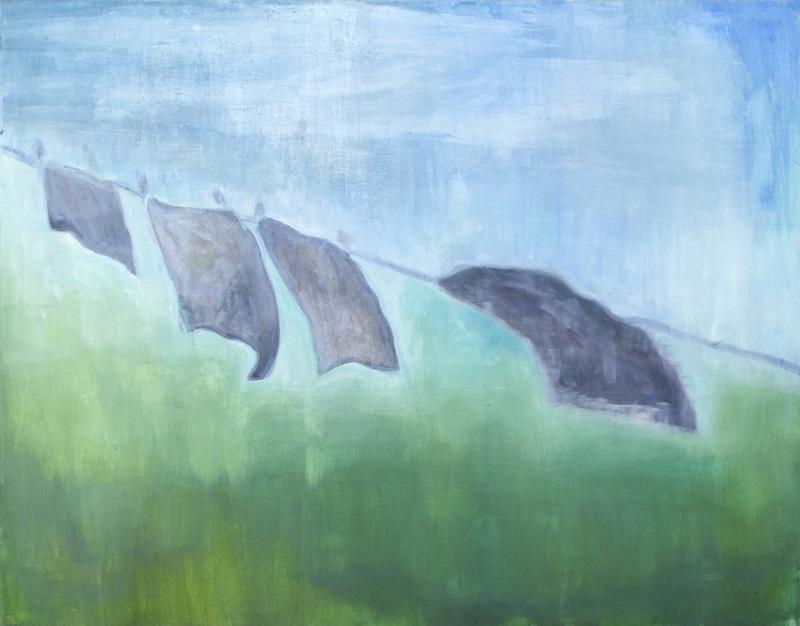
Granny Hogan’s kitchen was the center of the home. It was a small eat-in kitchen with a dining table, buffet, large cabinets, and built-in shelving. It was where the meals were prepared and eaten, homework was done, bills were paid, business was conducted, and works of childhood art were created. Everything had a place and there was a place for everything. In front of a slightly opened kitchen window was a miniature clothesline that was strung from cabinet to cabinet above her kitchen sink. This clothesline, if you can call it that, was actually meant to be strung across one’s mantel for Christmas Cards. It was about a five-foot length of red and green rope-like floss that had a tensile silver strand braided into it. Along with it were miniature red and green clothespins. Granny would hang paper towels, dishcloths, cheesecloths, baby bibs, and handkerchiefs to dry from this line.
I had gifted her the miniature Christmas clothesline a few years prior. It had come in a package of ornate designer Christmas Cards that my step-mother had purchased from Macey’s. I rescued it from the pile of cellophane wrappers and cardboard boxes she had asked me to dispose of. I thought it was clever and I knew that my Granny had a mantel in her living room and always displayed her Christmas cards on it. She would love this! But in true Granny Hogan fashion, it would not have only one use. It only donned the mantel on the first Christmas. By New Year’s end, it had found its true calling over my Granny’s kitchen sink and it stayed there for many years.
Each morning I observed Granny Hogan arise, dress, make coffee and a light breakfast of toast and egg or oatmeal and sausages. As she sat down to her meal, she would tear off one paper towel from the roll. This would serve as her napkin and her placemat for her morning meal. After breakfast, she would run a little soapy water in a small pink dishpan. (You know the one, the kind you get from a hospital stay.) She would fill it with about three inches of warm water and a few squirts of dish soap. She would then use the paper towel as a dishcloth to wash her dishes, her pans, and wipe the stove and counters. Finished, she would rinse the paper towel and hang it above the kitchen sink to dry.
At lunchtime, the now dry paper towel would again become a napkin and dishcloth, and again it would be rinsed and hung up on the little clothesline over the sink.
Suppertime was always a more grand and formal affair where a proper two or three-course meal was prepared, dessert included. After supper clean-up required the use of a scrubby sponge, cotton dishcloth, or Brillo pad.
Once the kitchen was closed for the night, Granny would set the coffee for the next day and make sure the proper pans and utensils were set out for breakfast. The recycled paper towel that had been hanging above the sink since lunch is now much smaller in size and as soft as cashmere. Granny would put the reused used paper towel in the pocket of her housecoat or tuck it inside the left sleeve of her nightgown. This reused used paper towel had transformed into the perfect handkerchief. Granny Hogan would keep it with her through the night and sometimes into the day. There were many times that one of those reinvented handkerchiefs would appear from the pocket of her apron, cardigan, or handbag to accost a smudge off my cheek or to pinch my nose with the command to “BLOW!” These reused used paper towels were a comforting and consistent presence. They smelled like her, felt like her, served her, and represented her. They were a curious artifact of my Granny Hogan that would touch the lives of the children charged to her care.
Although people often teased Granny about her frugality, we all benefitted from it in ways that most don’t care to know…..but I know. What I learned from her has set me up to be an overcomer when life’s pandemics hit. Now I am the one called to pass on this wisdom, the verbal tradition of our ancestors who survived wars and poverty without the assistance of machines, technology, or financial assistance programs, and who changed our lives by reusing a used papertowel.











I think that it’s smart to reuse a paper towel for everything, because it saves more things that you don’t have to use. i also wonder how the paper towel does rip when wetting it , and reusing it for everything else! But overall that’s very smart to do and i learned something new.