

Improve Your Understanding of Math and Science with “A Mind for Numbers”.


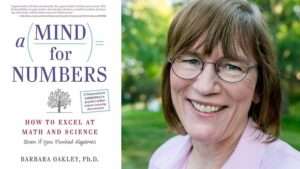
“A Mind for Numbers” by Barbara Oakley is a book that offers practical strategies and insights to help readers improve their learning and understanding of mathematical and scientific concepts. It focuses on the process of effective learning, highlighting techniques to overcome obstacles and develop a mindset for success in STEM (science, technology, engineering, and mathematics) fields.
Oakley, a professor of engineering, draws on her own experiences of struggling with math and science as a student. She addresses common misconceptions about learning and explains the brain’s natural way of processing information. The book is structured into ten chapters, each covering different aspects of effective learning and providing actionable advice. Here is a breakdown of the key themes and insights from “A Mind for Numbers”:
Chapter 1: Why is Math So Hard for Me? Oakley addresses the common belief that some individuals are “math people” while others are not. She debunks this notion and emphasizes that anyone can develop a “mind for numbers” or any other subject with the right approach. She introduces the concept of the focused and diffuse modes of thinking, explaining how the brain processes information during learning.
Chapter 2: Easy Does It: How to Learn Hard Things Well. The second chapter discusses the importance of deliberate practice and breaking difficult concepts into manageable chunks. Oakley explores the idea that successful learning requires pushing beyond one’s comfort zone and embracing challenges.
Chapter 3: Chunking: How to Make What You Learn Stick Oakley introduces the concept of chunking, which involves breaking down information into meaningful, manageable chunks. She explains that by chunking, learners can increase their working memory capacity and enhance their ability to process and retain information effectively.
Chapter 4: Improving Your Memory: How to Make What You Learn Stick This chapter delves into the mechanisms of memory and provides strategies for optimizing learning and retention. Oakley explores concepts such as active recall, which involves testing your knowledge by attempting to retrieve information without relying on external cues. She also emphasizes the role of sleep in memory consolidation and the benefits of creating vivid mental images to enhance memory.
Chapter 5: Becoming a Calculation Pro: How to Make Math and Science Easier Oakley addresses the challenges many individuals face when it comes to mathematics and offers practical strategies to overcome math anxiety and improve problem-solving skills. She highlights the importance of practicing regularly, seeking support from peers or tutors, and breaking down complex problems into smaller, more manageable steps.
Chapter 6: Reading for Understanding: How to Build a Memory Palace This chapter focuses on reading comprehension and introduces techniques to enhance understanding and retention. Oakley explores the concept of the “memory palace” and provides guidance on how to create mental images and associations to better remember and comprehend information.
Chapter 7: Learning How to Learn for Life Oakley emphasizes the value of lifelong learning and provides guidance on how to cultivate effective learning habits. She encourages readers to embrace curiosity, set clear learning goals, and foster a growth mindset. Oakley also discusses the importance of seeking out mentors and creating a supportive learning environment.
Chapter 8: Procrastination: Ten Tips for Tackling Procrastination In this chapter, Oakley addresses the issue of procrastination and offers practical strategies to overcome it. She introduces techniques such as the Pomodoro Technique (working in focused bursts with short breaks), setting specific goals, and creating a productive learning environment to combat procrastination and increase productivity.
Chapter 9: Why Is Group Work Often Such a Chore? This chapter explores the challenges and benefits of group work in the learning process. Oakley acknowledges that group work can be challenging due to various factors such as mismatched schedules, conflicting ideas, and free-riding. She provides strategies for effective collaboration, including establishing clear goals, assigning specific roles, and fostering open communication and feedback.
Chapter 10: Test-Taking Tips: How to Reduce Test Anxiety and Improve Your Grades The final chapter focuses on test-taking strategies and overcoming test anxiety. Oakley provides advice on how to prepare effectively for exams, including creating a study schedule, practicing active recall, and using strategies such as the Feynman Technique (explaining concepts in simple terms) to solidify understanding. She also shares tips for managing test anxiety, such as deep breathing exercises and reframing negative thoughts.
Throughout the book, Oakley includes anecdotes, examples, and practical exercises to reinforce the concepts and techniques she presents. She also offers additional resources and references for readers interested in exploring the topics further.
“A Mind for Numbers” by Barbara Oakley provides readers with a comprehensive guide to effective learning and developing a “mind for numbers” in STEM fields. The book emphasizes the importance of adopting a growth mindset, embracing challenges, and employing proven learning techniques such as chunking, active recall, and deliberate practice. Oakley addresses common obstacles such as math and science anxiety, procrastination, and test anxiety, offering practical strategies to overcome them. By following the advice and implementing the techniques outlined in the book, readers can enhance their learning abilities, improve their understanding of mathematical and scientific concepts, and achieve success in their academic and professional pursuits.













Responses