

Football Defensive Strategies part 1: Basic NFL Defenses and How to Read Them

Introduction
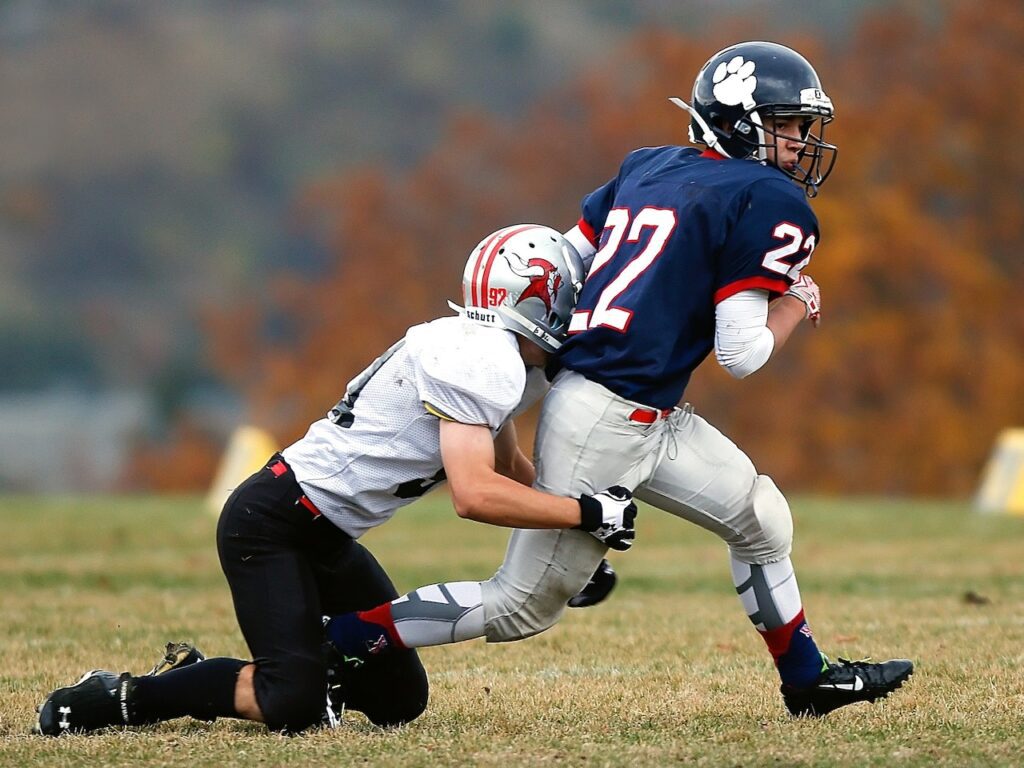
Whether an NFL, an NCAA, or a local high school game, American football is a highly competitive and complex sport, with teams competing to outwit and outplay their opponents. One of the most important aspects of the game is the defense. A team’s defensive strategy can be the difference between winning and losing. In this essay, we will explore some of the basic types of NFL defenses and how they are used to stop the opposing offense.
Man-to-Man Defense
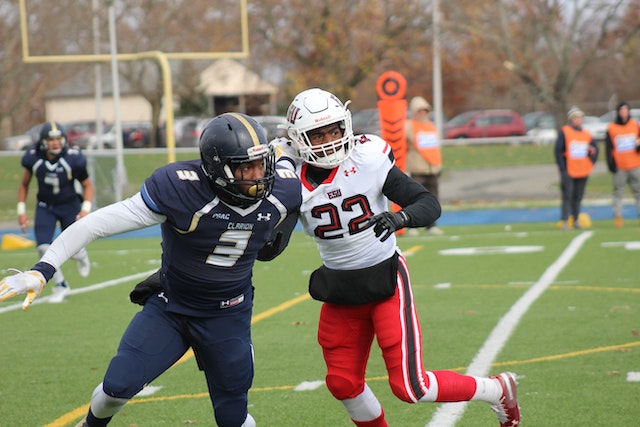
The man-to-man defense is the most basic type of defense in the NFL. It is a straightforward strategy where each defensive player is assigned to cover a specific offensive player. This defense is often used when the offense is expected to pass the ball, as it allows the defense to focus on the receivers and prevent them from getting open.
Zone Defense

The zone defense is a more complex strategy than the man-to-man defense. It is a defensive alignment where each defensive player is responsible for a specific area of the field. The players are not assigned to cover a specific offensive player, but instead are responsible for defending their area. This type of defense is often used when the offense is expected to run the ball, as it allows the defense to focus on the running lanes and prevent the offense from gaining yards.
Nickel Defense
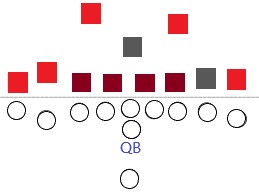
The nickel defense is a variation of the zone defense. It is a defensive alignment where five defensive backs are used instead of the traditional four. This allows the defense to have more players in the secondary, which can be used to defend against the pass. The nickel defense is often used when the offense is expected to pass the ball, as it allows the defense to have more players in coverage and prevent the offense from completing passes.
Dime Defense
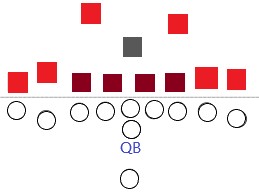
The dime defense is a variation of the nickel defense. It is a defensive alignment where six defensive backs are used instead of the traditional four or five. This allows the defense to have even more players in the secondary, which can be used to defend against the pass. As with the nickel defense, the dime defense is also used when the offense is expected to pass the ball, gives the defense even more players in coverage.
Cover 2 Defense
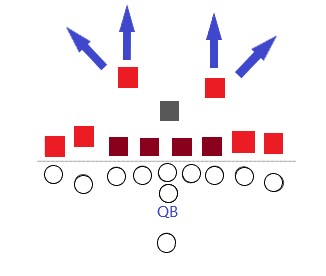
The cover 2 defense is a defensive alignment where two deep safeties are used to defend against the pass. The safeties are responsible for covering the deep part of the field, while the other defensive players are responsible for covering the short and intermediate routes. This type of defense is used when the offense is expected to pass the ball, and allows the defense to have two players in deep coverage and prevent the offense from completing deep passes.
The 4-3 and the 3-4 Defenses
The 3-4 and 4-3 defenses are two of the most popular defensive formations used in the NFL so I decided to talk about them together. Both of these defensive formations have been used for decades and have been adapted to fit the modern game. The 3-4 defense is a defensive formation that consists of three defensive linemen and four linebackers. The 4-3 defense is a defensive formation that consists of four defensive linemen and three linebackers. Both of these defensive formations have their own strengths and weaknesses, and they are used in different situations depending on the game plan of the team.
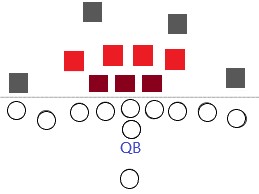
The 3-4 defense is a defensive formation that is used to stop the run and put pressure on the quarterback. This formation is typically used when the offense is expected to pass the ball more often than run. The three defensive linemen are responsible for clogging up the running lanes and occupying blockers, while the four linebackers are responsible for filling the gaps and making tackles. The 3-4 defense is also effective against the pass, because the four linebackers can drop back into coverage and the three defensive linemen can rush the quarterback.
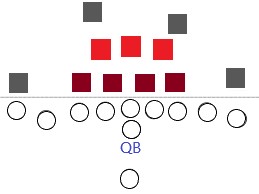
The 4-3 defense is a defensive formation that is used to stop the pass and put pressure on the quarterback. This formation is typically used when the offense is expected to run more often than pass. The four defensive linemen are responsible for occupying blockers and rushing the quarterback, while the three linebackers are responsible for dropping back into coverage and making tackles. The 4-3 defense is also effective against the run, as the three linebackers can fill the gaps and the four defensive linemen can clog up the running lanes.
Conclusion
The NFL is a highly competitive and complex sport, and the defense is an important part of the game. There are many different types of NFL defenses, each with its own strengths and weaknesses. The man-to-man defense is the most basic type of defense, while the zone defense, nickel defense, dime defense, and cover 2 defense are more complex strategies. Each type of defense has its own advantages and disadvantages, and teams must choose the right defense for the situation in order to be successful.
Additional Resources
If you are looking for more help with these defenses, there are a number of websites that can provide you with additional information, such as:
- NFL.com
- Football Outsiders
- Pro Football Focus
- X's and Noles is a YouTube channel that has a load of good videos on basic and advanced defensive concepts.
Additionally, there are a number of books, such as:
- “The Art of Defensive Football” by Bill Belichick
- Books by Lou Tepper which cover each defensive position.
- Football for Dummies by Howie Long and John Czarnecki
- The Art of Defensive Football: A Winning Strategy for the Modern Game by Bill Arnsparger
- The Ultimate Guide to (Almost Every) Defense Formation and their Basic Schemes! (Ultimate Guide Series) by Andrew C. Brown
- Defensive Coordinator's Football Handbook by Leo Hand








Responses