
“A Whole New Mind: Why Right-Brainers Will Rule the Future”: A Summary and Review

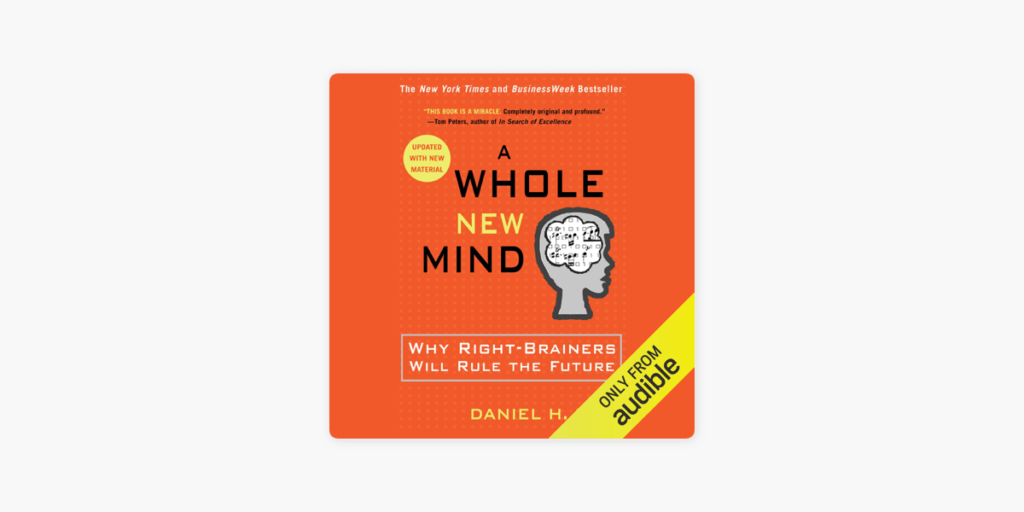
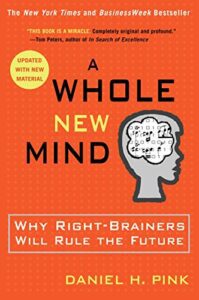
“A Whole New Mind: Why Right-Brainers Will Rule the Future” by Daniel H. Pink explores the shift in the global economy from the Information Age to the Conceptual Age and argues that individuals who possess right-brain qualities and skills will be the ones to thrive in this new era. Pink presents a compelling case for the importance of creativity, empathy, and holistic thinking in the face of automation and globalization.
Pink presents a thought-provoking perspective on the changing dynamics of the global economy and the skills needed to succeed in the Conceptual Age. The book emphasizes the significance of right-brain qualities such as creativity, empathy, and holistic thinking, which are becoming increasingly valuable as routine tasks are automated and outsourced.
Here is a summary of the main points covered in the book:
- The Conceptual Age: Pink proposes that we are transitioning from the Information Age, which valued logical, analytical, and left-brain thinking, to the Conceptual Age, where creativity, empathy, and right-brain skills take center stage. He argues that in this new age, where routine tasks can be automated or outsourced, individuals need to tap into their creative and intuitive capacities to excel.
- The Six Essential Aptitudes: Pink identifies six essential aptitudes that will be crucial for success in the Conceptual Age:
a. Design: The ability to create aesthetically pleasing and meaningful experiences. Design thinking and aesthetics play a significant role in product development, customer engagement, and problem-solving.
b. Story: The capacity to communicate ideas and information effectively through storytelling. The power of storytelling is essential for capturing attention, creating emotional connections, and conveying complex messages.
c. Symphony: The skill to synthesize diverse elements and see the big picture. Holistic thinking, connecting dots, and understanding complex systems are key to solving problems and finding innovative solutions.
d. Empathy: The ability to understand and relate to others’ emotions and perspectives. Empathy is crucial for effective communication, collaboration, and building meaningful relationships.
e. Play: The capacity for curiosity, exploration, and experimentation. Playfulness fosters creativity, helps generate new ideas, and encourages a flexible and open mindset.
f. Meaning: The pursuit of purpose and finding personal fulfillment. In the Conceptual Age, people are increasingly seeking meaningful work and experiences that align with their values and contribute to the greater good.
- The Rise of the Right Brain: Pink argues that as left-brain tasks become automated or outsourced, the demand for right-brain skills is growing. Fields such as art, design, storytelling, inventing, and caregiving are gaining prominence. Cultivating and harnessing these skills will be crucial for individuals seeking to thrive in the evolving economy.
- Strategies for Developing Right-Brain Skills: The book provides practical strategies and exercises for developing and enhancing right-brain aptitudes. These include engaging in creative activities, seeking diverse experiences, practicing empathy, embracing playfulness, and finding personal purpose and fulfillment.
- Implications for Education and Business: Pink discusses the implications of the Conceptual Age for education and business. He argues for a more holistic and interdisciplinary approach to education that fosters creativity, critical thinking, and emotional intelligence. In the business world, he emphasizes the need for organizations to embrace design thinking, foster a culture of innovation, and create meaningful experiences for customers.
“A Whole New Mind” challenges traditional notions of success and offers a compelling vision for the future. By emphasizing the importance of right-brain skills and qualities, Daniel H. Pink encourages readers to embrace their creative and intuitive capacities. The book serves as a guide for individuals seeking to thrive in a rapidly changing world where human qualities will be highly valued.
Pink’s exploration of the six essential aptitudes – design, story, symphony, empathy, play, and meaning – provides readers with a framework to cultivate these crucial skills. By incorporating design thinking, storytelling, systems thinking, empathy, playfulness, and a sense of purpose into their lives, individuals can position themselves for success in the Conceptual Age.
The book also highlights the need for education and business to adapt to this new reality. Education systems should focus on developing creativity, critical thinking, and emotional intelligence, moving away from purely left-brain, analytical approaches. Businesses must embrace design thinking, foster a culture of innovation, and prioritize meaningful experiences for their customers.
Overall, “A Whole New Mind” challenges traditional notions of success and encourages individuals to tap into their right-brain capacities to thrive in the changing landscape. It offers practical strategies, insights, and examples to inspire readers to embrace their creativity, think holistically, and connect with others on a deeper level. By embracing the qualities that make us uniquely human, such as creativity, empathy, and meaning, individuals can navigate the challenges of the Conceptual Age and find fulfillment and success in their personal and professional lives. “A Whole New Mind” provides a valuable perspective and a roadmap for adapting to the demands of an ever-evolving world.
Click the cover below to preview or buy: “A Whole New Mind”











Responses